
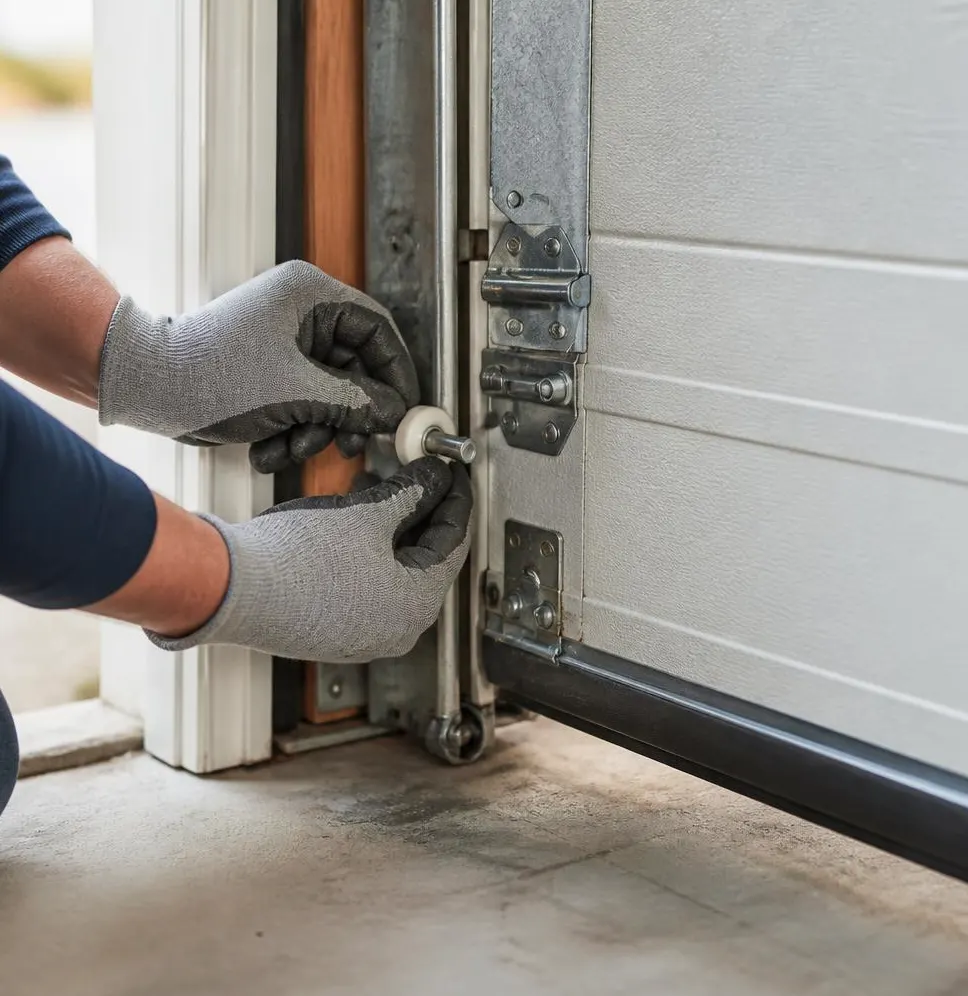
What Skipping Fall Maintenance Actually Costs You
Put this off until January and you're not just risking a squeaky door. A spring that's been quietly rusting since last winter can snap the moment cold, wet weather adds extra strain to the cycle. A track packed with months of dry-season dust turns to gritty paste the first time rain gets in, which grinds down rollers and throws the door off balance. Weatherstripping that cracked in the summer heat won't seal anything once the rain actually arrives, so water finds its way onto stored boxes, tools, or a car you'd rather not have sitting in a damp garage all winter. None of this is dramatic until the morning your door won't open and you're late for work, or a tech tells you the opener motor burned out trying to force a door that was never properly balanced.
Why This Time of Year Is the Real Test
Garage doors around here spend most of the year dealing with heat, dry air, and the fine dust and occasional wildfire smoke residue that settles on everything outdoors. That buildup sits in the tracks and hinges mostly unnoticed because there's no rain to wash it anywhere. Then winter rain shows up, and all that dust becomes a gritty film that clings to moving parts, accelerates wear, and hides rust until it's already a problem. It's also worth remembering that many homes in this area have had seismic retrofitting done to walls and foundations — if your garage was part of that work, it's a good time to confirm the door's bracing and anchor points are still solid, since a loose panel or track bracket is a bigger liability once storms and shifting ground are both in play.
Inspect the Weatherstripping and Seals
Check the rubber seal along the bottom of the door and the strips along the sides. Months of sun and dry heat make rubber brittle, and brittle rubber cracks or shrinks away from the frame. Run your hand along it — if it's stiff, split, or pulling loose, replace it before the rain tests it for you. A new seal is a cheap fix compared to drywall or flooring damage from water that got past it.
Clean and Lubricate Before the Grit Sets In
Wipe down the tracks with a damp cloth to clear dust before it mixes with the first rain and turns into sludge. Once clean, lubricate the rollers, hinges, and springs with a silicone-based garage door lubricant — not WD-40, which attracts dust rather than repelling it. This single step does more to prevent winter noise and sticking than almost anything else on this list.
Test the Balance
Disconnect the opener by pulling the release cord, then lift the door halfway by hand. It should stay in place on its own. If it drifts up or crashes down, the springs are no longer carrying their share of the weight, which means the opener is doing extra work it wasn't built for. That extra strain tends to show up as a dead opener motor at the worst possible time.
Look Closely at the Springs
Rust on a spring isn't cosmetic — it's a sign the metal is weakening from the inside. Cold, damp mornings put more stress on springs than warm, dry ones, which is exactly when a rust-weakened spring is most likely to fail. If you see rust, gaps between coils, or the spring looks stretched compared to its neighbor, don't wait on this one.
Check the Safety Sensors
The photo-eye sensors near the bottom of the tracks collect dust just like everything else, and a dusty or misaligned sensor can cause the door to reverse for no clear reason — or worse, fail to reverse when it should. Wipe the lenses clean and make sure both sensors are aligned and lit.
Plan for Power Outages
Winter storms occasionally bring outages. If your opener doesn't have battery backup, consider adding one, or at minimum know where the manual release is so you're not stuck with the car trapped inside during a blackout.
When It's Time to Call Brea Garage Door
If the balance test fails, springs show rust or wear, or the door is grinding, sticking, or reversing on its own, that's beyond a DIY fix. Brea Garage Door handles full Garage Door Maintenance tune-ups — cleaning, lubrication, hardware tightening, and balance adjustment — as well as Spring Replacement done with properly matched springs rated for your door's weight, not a generic swap. We'll also flag anything related to seismic bracing or panel damage while we're in there.
If your garage door needs attention before the rain rolls in, call Brea Garage Door today and get it handled right, before winter makes the decision for you.